
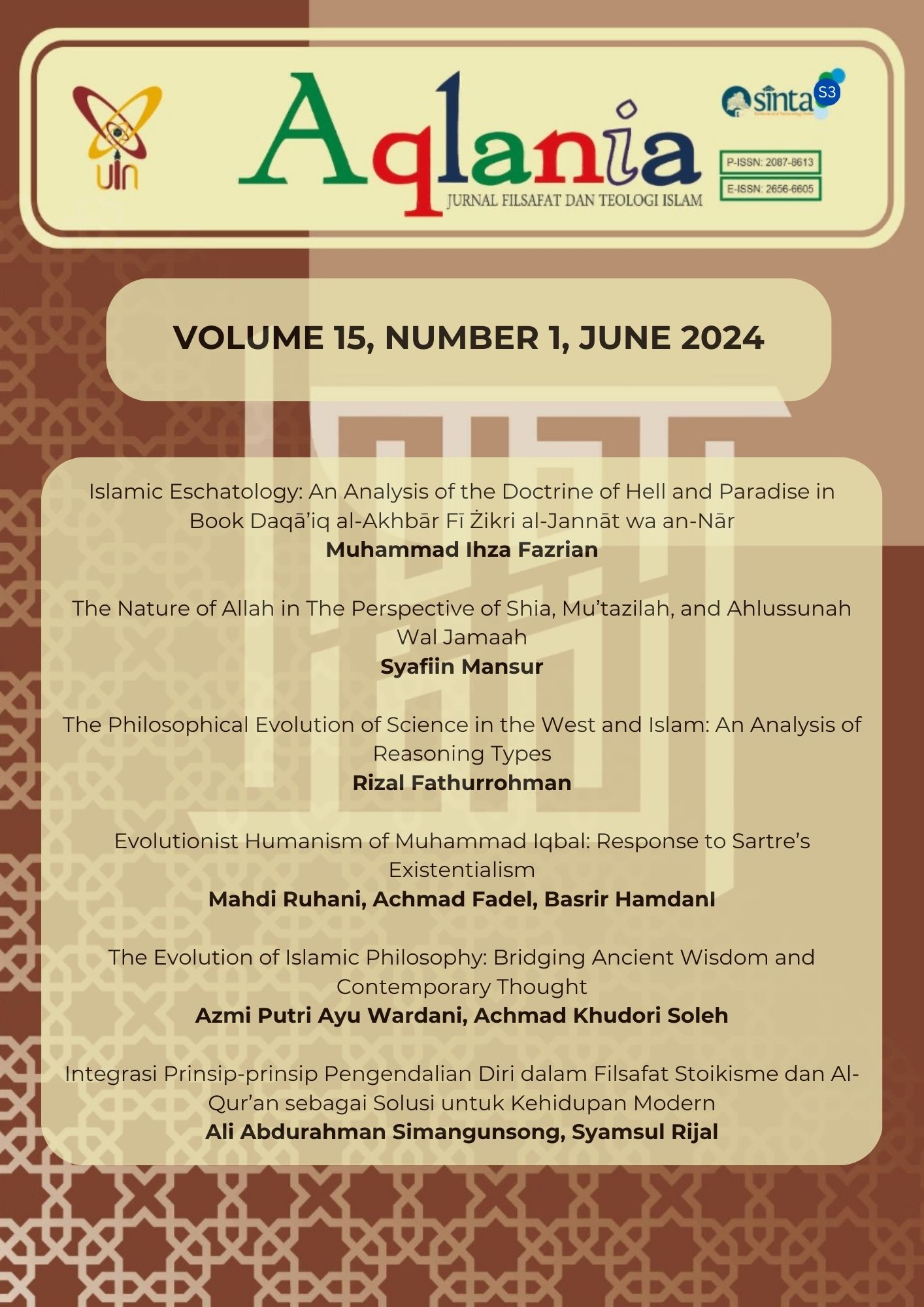
Integration of the Principles of Self-Control in Stoicism and the Qur'an as a Solution for Modern Life
DOI:
https://doi.org/10.32678/aqlania.v15i1.10485Keywords:
Al-Qur’an, Pengendalian diri, StoikismeAbstract
The life of modern society, which is currently marked by the development of technology and communication, has shown significant progress. However, it turns out that this progress has also given rise to quite complex problems. The pressures of life in this era have diminished individuals' ability to practice self-control, making them vulnerable to various mental and spiritual illnesses. By combining the principles of Stoicism philosophy and the teachings of the Quran, this research explores how self-control can serve as an effective solution to various life challenges nowadays. The method used is qualitative, and data from various literature sources were collected to analyze the principles of self-control from both perspectives. The findings indicate that self-control can be achieved by combining Stoic principles and Quranic teachings. Both provide effective guidance for managing emotions and directing behavior positively in the face of modern life's challenges. The integration of these perspectives offers a holistic and practical approach to enhancing self-control through the development of self-awareness, determination to accept Allah's decrees, thinking before acting, and exercising patience when facing trials in life.
Downloads
References
Asroor, Zaimul. “Kebebasan Kehendak Manusia: Studi Kasus Penafsiran Bintu Shāṭī.” Journal of Qur’an and Hadith Studies 8, no. 2 (2019). https://doi.org/10.15408/quhas.v8i2.13393.
Baqi, Muhammad Fuad Abdul. Al-Mu’jam Al-Mufrahras Li Lafadz Al-Qur’an Al-Karim. Beirut: Dar al-Fikr, 1981.
Edward, Paul. The Encyclopedia of Philosophy. New York: Pearson College Div, 1967. https://doi.org/10.2307/2218031.
Ghufron, M. Nur, dan Rini Risnawati. Teori-Teori Psikologi. Yogyakarta: Ar-Ruzz Media, 2010.
Hamka. Tafsir Al-Azhar. Jilid 5. Singapura: Pustaka Nasional Pte Ltd Singapura, 2003.
Suraiya, Syamsul Rijal, dan Zaenuddin Hudi Prasojo. “Sufism and Religious Practices in Modern Lifestyle.” Religió: Jurnal Studi Agama-Agama 9, no. 1 (2019). https://doi.org/10.15642/religio.v9i1.1231.
Maftuhah, Siti, dan Irman. “Konsep Self Control dalam Perspektif Al-Qur’an.” At-Tajdid: Jurnal Pendidikan dan Pemikiran Islam 7, no. 2 (2023). https://doi.org/http://dx.doi.org/10.24127/att.v6521a2366.
Manampiring, Henry. Filosofi Teras. Jakarta: Kompas, 2019.
Mansyur, dan Casmini. “Kontrol Diri dalam Perspektif Islam dan Upaya Peningkatannya Melalui Layanan Bimbingan Konseling Islam.” At-Taujih Bimbingan dan Konseling Islam 5, no. 2 (2022). https://doi.org/http://dx.doi.org/10.22373/taujih.v5i2.15084.
Pertiwi, Yacintha, Rohimin, dan Nelly Marhayati. “Stoikisme Era Modern dan Relevansinya dengan Ajaran Islam.” Jurnal Manthiq: Jurnal Filsafat Agama Dan Pemikiran Islam 8, no. 1 (2023): 34–48. https://doi.org/http://dx.doi.org/10.29300/mtq.v8i1.11241.
Rahman, Taufik, Lola Pertiwi, dan Ariyandi Batubara. “Hakikat Kebahagiaan Hidup: Konsensus antara Al-Qur’an dan Filsafat Stoikisme.” Jurnal Riset Agama 2, no. 3 (2022). https://doi.org/10.15575/jra.v2i3.19326.
Raihanah. “Konsep Sabar dalam Alquran.” Tarbiyah Islamiyah 6, no. 1 (2016). https://doi.org/https://doi.org/10.18592/jtipai.v6i1.1809.
Rifqiawan, Raden Arfan. “Perbandingan Ajaran Syadziliyah dan Stoikisme dalam Memaknai Enterpreunership dan Akuntabilitas.” EAIC: Esoterik Annual International Conferences Vo. 1, no. No. 1 (2022). https://proceeding.iainkudus.ac.id/index.php/EAIC/article/view/305.
Salzgeber, Jonas. The Little Book of Stoicism. Swiss: NJlifehacks, 2019.
Shihab, M. Quraish. Tafsir Al-Misbah: Pesan, Kesan, dan Keserasian Al-Qur’an. Jilid 1. Jakarta: Lentera Hati, 2002.
———. Tafsir Al-Misbah: Pesan, Kesan, dan Keserasian Al-Qur’an. Jilid 6. Jakarta: Lentera Hati, 2002.
Sholeh, Moh, dan Imam Musbikin. Agama sebagai Terapi. Yogyakarta: Pustaka Pelajar, 2005.
Sopyan Hadi. “Konsep Sabar dalam Al-Qur’an.” Jurnal Madani: Ilmu Pengetahuan, Teknologi, dan Humaniora, 1, no. 2 (2018). https://doi.org/https://doi.org/10.33753/madani.v1i2.25.
Stevanus, A, B Jagom, F Mahendra, G L L Wangge, dan ... “Hakikat Jihad serta Pemaknaannya dalam Konteks Indonesia.” Perspektif 16, no. 1 (2021). https://adityawacana.id/ojs/index.php/jpf/article/view/21.
Syukur, H.M. Amin. Zuhud di Abad Modern. Yogyakarta: Pustaka Pelajar, 2004.
Wibowo, A. Setyo. Ataraxia: Bahagia menurut Stoikisme. Yogyakarta: Kanisius, 2019.
Zulkarnaen, Iskandar, dan Ahmad Assiddiq Geofani. “Konsep Kebahagiaan Perspektif Thomas Aquinas.” Aqlania: Jurnal Filsafat dan Teologi Islam 14, no. 2 (2023): 187–209. https://jurnal.uinbanten.ac.id/index.php/aqlania/article/view/9654.
Downloads
Published
How to Cite
Issue
Section
License
Copyright (c) 2024 Ali Abdurahman Simangunsong, Syamsul Rijal

This work is licensed under a Creative Commons Attribution 4.0 International License.


